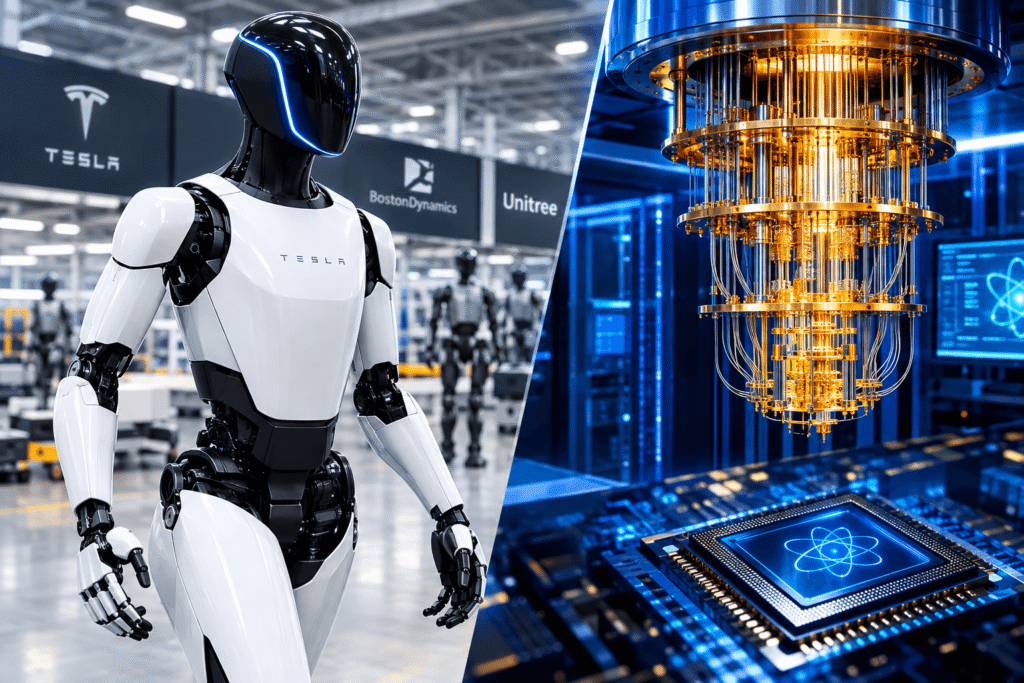
Humanoid robots are moving from research labs into real commercial settings faster than expected, with Tesla, Boston Dynamics, and Unitree all pushing toward large-scale production in 2026, even as quantum computing crosses its own milestone from theoretical promise to early commercial reality.
Quick Answer / Key Update
Manufacturing costs for humanoid robots dropped 40% between 2023 and 2024, far faster than the expected 15 to 20 percent annual decline, accelerating commercial timelines by one to four years depending on the application. Tesla plans to produce 50,000 Optimus units in 2026 at a price of $20,000 to $30,000 each, while Unitree already offers its G1 humanoid at $16,000 and Boston Dynamics targets a commercial Atlas launch between 2026 and 2028 priced around $140,000 to $150,000.
What Happened?
A sharp, unexpected drop in humanoid robot manufacturing costs has pulled forward adoption timelines that industry experts previously expected to take until the early 2030s. Experts now predict humanoid robots will appear in industrial settings in significant numbers by 2026 to 2028, with broader consumer and service-sector adoption expected to follow through the 2030s.
In parallel, quantum computing has reached what industry observers describe as an inflection point, transitioning from theoretical promise into early commercial use in specific domains. HSBC reported improving bond trading efficiency by 34% using IBM’s quantum computer, while Ford Otosan has deployed quantum annealing techniques in production settings.
Latest Update
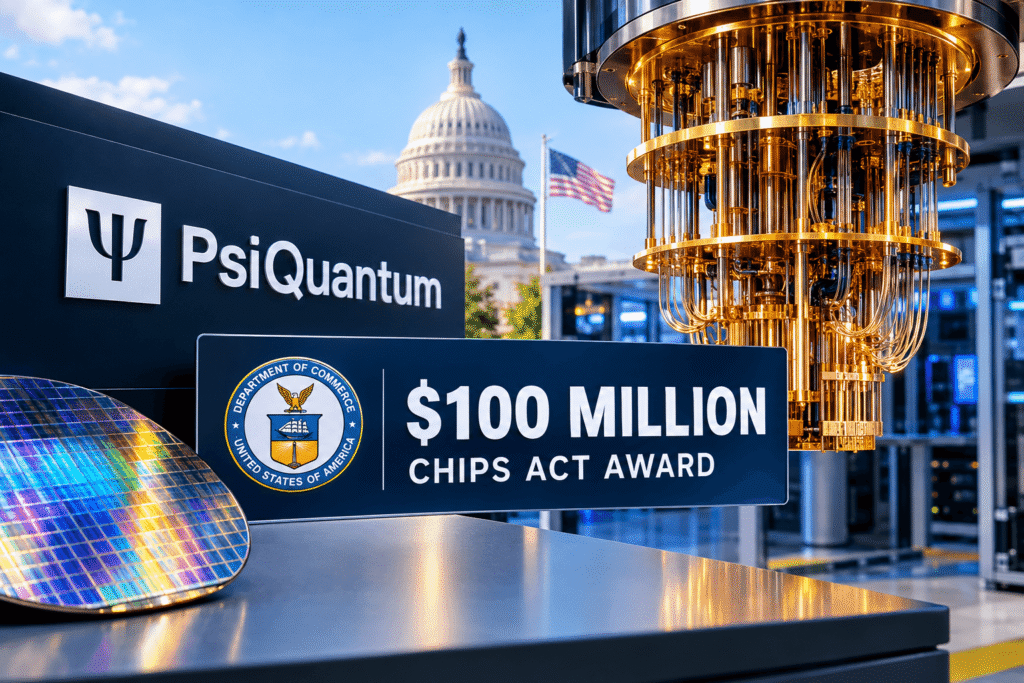
On September 8, 2026, PsiQuantum finalized a $100 million CHIPS Act award with the U.S. Department of Commerce to accelerate domestic semiconductor and quantum computing manufacturing, underscoring continued government investment in quantum infrastructure. IBM has set a target of achieving verified quantum advantage by the end of 2026 and reaching fault-tolerant quantum systems by 2029, milestones that would mark a significant leap in the practical usefulness of quantum computers for real-world problems.
Why Is This Trending?
Interest in humanoid robotics and quantum computing is rising because both technologies are moving from speculative, long-term research topics into concrete commercial products and government-backed infrastructure investments within the same calendar year. The scale of investment, including Tesla’s 50,000-unit Optimus production target and PsiQuantum’s nine-figure federal award, signals that these innovations are advancing faster than many earlier industry forecasts predicted.
Key Details
- Humanoid robot manufacturing cost drop (2023-2024): 40%, versus an expected 15% to 20% annual decline
- Tesla Optimus: 50,000 units planned for 2026, priced at $20,000 to $30,000
- Unitree G1: Available now at approximately $16,000
- Boston Dynamics Atlas: Commercial launch targeted 2026-2028, priced around $140,000 to $150,000
- PsiQuantum CHIPS Act award: $100 million, finalized September 8, 2026
- IBM quantum targets: Verified quantum advantage by end of 2026, fault-tolerant systems by 2029
What We Know So Far
Confirmed: Manufacturing cost trends, individual company production targets and pricing, and the PsiQuantum CHIPS Act award are confirmed through company statements and industry reporting as of September 2026.
Developing: Information is not yet confirmed on how quickly humanoid robots will move from industrial pilot deployments into widespread commercial and consumer use, as broader adoption still depends on continued cost declines and safety validation.
Why This Matters
The convergence of falling humanoid robot costs and maturing quantum computing capabilities matters because both technologies have the potential to reshape manufacturing, logistics, and complex computational problem-solving simultaneously. For businesses, earlier-than-expected cost declines mean humanoid automation may become economically viable for a wider range of use cases sooner than previously planned, while early quantum computing wins in finance and manufacturing suggest the technology is beginning to deliver measurable value beyond research demonstrations.
What Happens Next?
Expect continued humanoid robot deployment announcements from major manufacturers through the remainder of 2026, alongside further quantum computing milestones as IBM and other players work toward their stated 2026 and 2029 targets. Government investment, exemplified by PsiQuantum’s CHIPS Act award, is likely to continue playing a significant role in accelerating both domestic quantum computing infrastructure and the broader innovation ecosystem supporting these technologies.
Related Trends and Searches
Related searches include "Tesla Optimus price 2026," "quantum computing breakthrough 2026," "humanoid robot commercial launch," and "PsiQuantum CHIPS Act," reflecting strong public interest in how quickly these once-futuristic technologies are becoming commercially available.
Frequently Asked Questions
How much does a Tesla Optimus robot cost?
Tesla plans to produce 50,000 Optimus units in 2026, priced between $20,000 and $30,000 each.
Are humanoid robots commercially available now?
Some, like the Unitree G1 at approximately $16,000, are already available, while others, like Boston Dynamics’ Atlas, are targeting commercial launch between 2026 and 2028.
What is the PsiQuantum CHIPS Act award?
It is a $100 million award finalized on September 8, 2026, between PsiQuantum and the U.S. Department of Commerce to accelerate domestic quantum computing and semiconductor manufacturing.
Has quantum computing achieved a real business benefit yet?
Yes, HSBC reported a 34% improvement in bond trading efficiency using IBM’s quantum computer, and Ford Otosan has deployed quantum annealing in production settings.
When will quantum computers reach fault-tolerant systems?
IBM has targeted 2029 for fault-tolerant quantum systems, following a goal of verified quantum advantage by the end of 2026.
Why did humanoid robot costs drop so quickly?
Manufacturing costs fell 40% between 2023 and 2024, well ahead of the expected 15% to 20% annual decline, though the specific engineering and supply chain factors behind the acceleration are not detailed in every report.
Which industries will adopt humanoid robots first?
Experts expect industrial settings, such as manufacturing and logistics, to see significant humanoid robot adoption by 2026 to 2028, with broader consumer applications following through the 2030s.