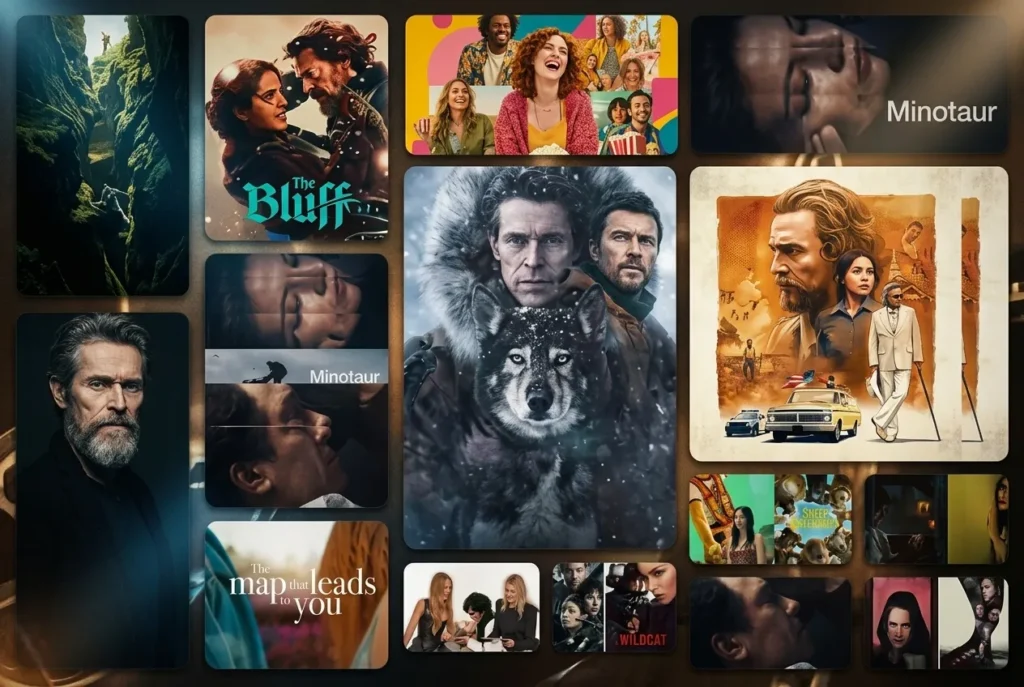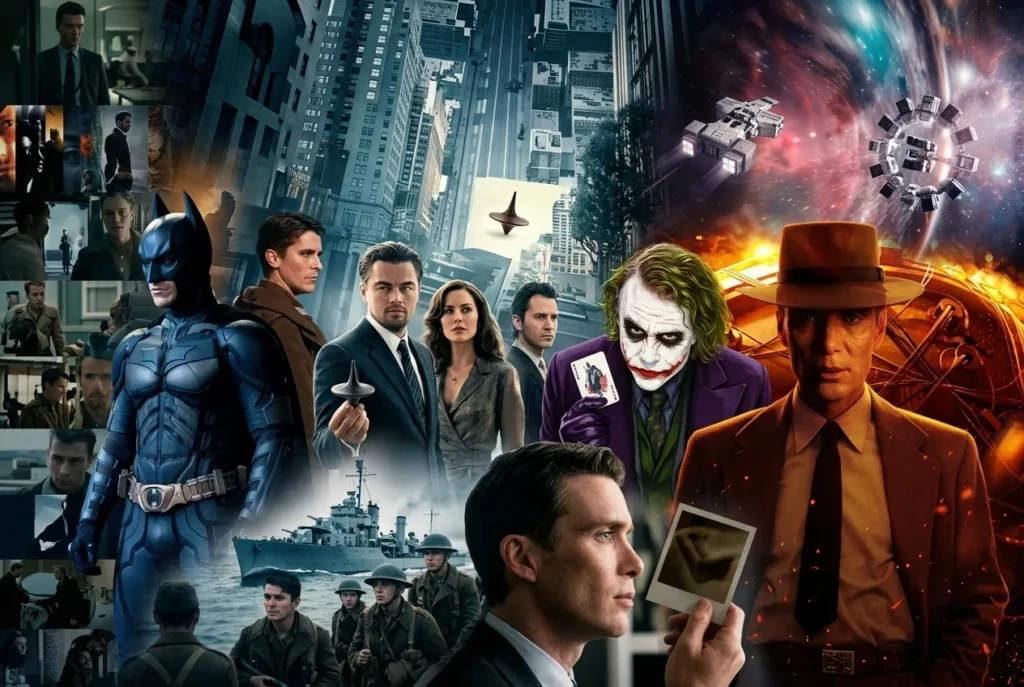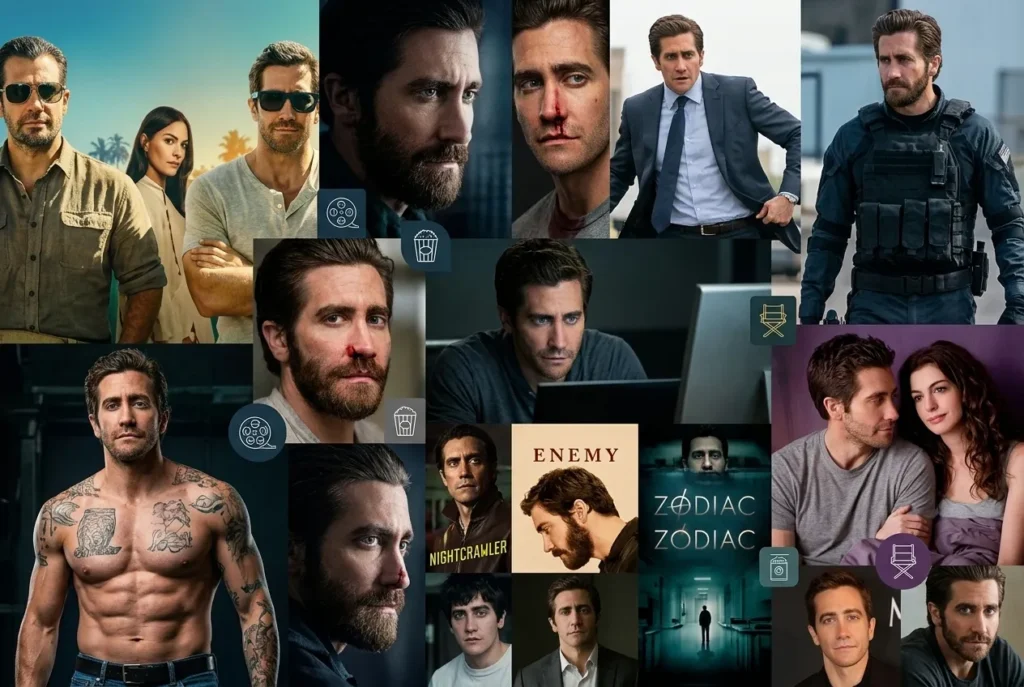
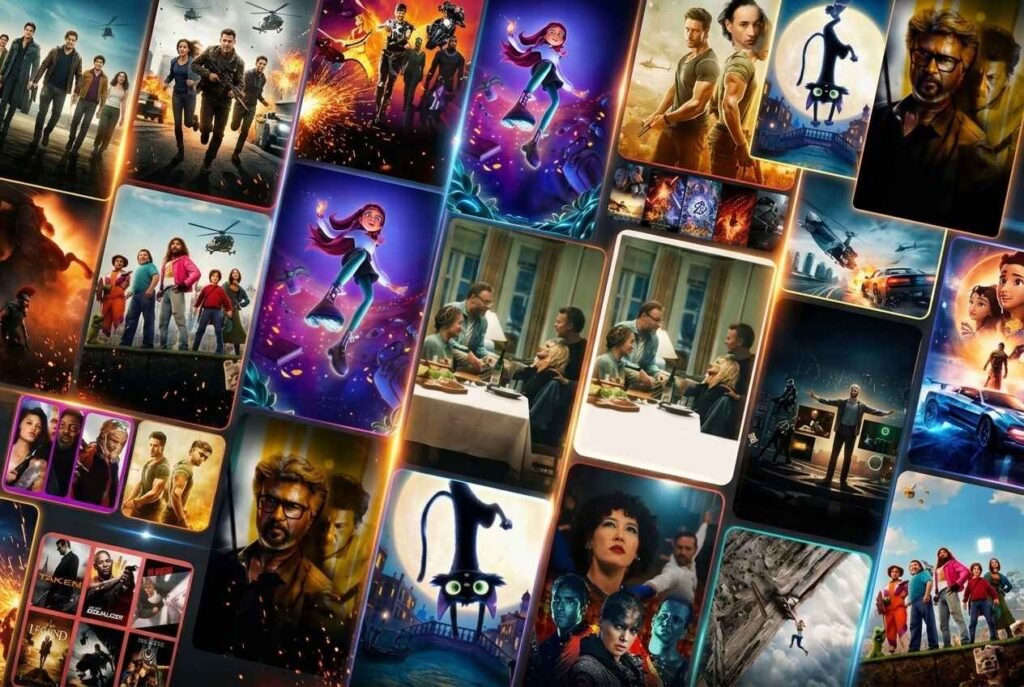
Movies are the most popular storytelling art form on the planet. Whether you want a comedy for a lazy Sunday, a thriller that keeps you awake, or a classic you have been meaning to watch for years, movies give you a full experience in about two hours. This guide explains everything you need to know about movies: where they came from, how genres work, which films everyone should see, where to watch them legally, how to read ratings without being fooled, and how to always find something good to watch.
If you have ever spent 40 minutes scrolling a streaming app and then watched nothing, this article is for you.
What Are Movies?
Movies (also called films or motion pictures) are stories told through moving images and sound, usually 80 to 180 minutes long, made for theaters, television or streaming. A movie combines writing, acting, cinematography, editing, music and sound design. Today people watch movies in cinemas, on streaming platforms such as Netflix, Prime Video and Disney+, and on free services like Tubi.
Key Takeaways
- Movies began in the 1890s and have grown into a global industry covering every language and culture.
- There are more than a dozen main genres, and most modern films mix two or three of them.
- You can watch great movies legally for free using services like Tubi, Pluto TV, Kanopy and Hoopla.
- Ratings sites such as IMDb, Rotten Tomatoes and Metacritic measure different things, so use more than one.
- A tool like JustWatch shows you exactly which platform has the movie you want.
What Are Movies? A Simple Definition
A movie is a recorded story shown as a sequence of images fast enough that your eyes see smooth motion. Most movies run between 90 and 150 minutes, though some classics are much longer. The word “film” comes from the celluloid strip that carried early recordings, and it is still used even though most movies today are shot and shown digitally. You can read the technical background on Wikipedia’s film article.
People use “movie,” “film,” “picture” and “motion picture” for the same thing. In everyday American English “movie” is more common, while “film” sounds a little more formal or artistic. There is no difference in what you watch.
A Short History of Movies
The story of movies is a story of technology and imagination moving together. If you want the full timeline, the History of film page is a good reference. Here are the milestones that matter most.
The 1890s: the beginning. Early inventors experimented with moving images, and in December 1895 the Lumière brothers held one of the first paid public screenings in Paris. These films were only about a minute long, but audiences were amazed. You can learn more about the pioneers at the Lumière Institute.
The silent era. For over 30 years, movies had no recorded dialogue. Live musicians played in the theater, and stars like Charlie Chaplin became famous around the world using only expression and movement.
1927: sound arrives. The Jazz Singer showed that audiences wanted to hear actors speak, and the industry changed almost overnight.
The Golden Age of Hollywood. From the 1930s to the 1950s, big studios produced hundreds of films a year and built the star system. Color became standard, and epics such as The Wizard of Oz became cultural landmarks. Read more about this period in Golden Age of Hollywood and on the Turner Classic Movies site.
The 1970s: the blockbuster. Films like Jaws and Star Wars proved that a movie could be a worldwide event and earn enormous money. Studios started planning around summer releases and sequels.
The 1990s and 2000s: digital effects. Computer-generated imagery changed what could be shown on screen, and digital cameras began replacing film stock.
The 2010s and 2020s: streaming. Streaming media moved movie watching from theaters to living rooms and phones. Today a film can premiere in theaters, on a streaming service, or both, and audiences choose how and when to watch.
[INTERNAL LINK: add link to a FindTechHome article about streaming technology or smart TVs]
Main Movie Genres Explained
A genre is a category that tells you what kind of experience to expect. The film genre overview lists dozens, but most people work with the following core groups.
Action
Action movies are built around chases, fights, stunts and high stakes. They are fast and physical. Good examples include Mad Max: Fury Road and Die Hard.
Comedy
Comedies aim to make you laugh, from light romantic comedies to sharp satire. The best comedies have strong characters as well as jokes, which is why they are easy to rewatch.
Drama
Dramas focus on realistic characters and emotional situations. Most Oscar-winning films are dramas because they show human struggle in a serious way.
Horror
Horror movies are made to scare you, using suspense, atmosphere and shock. The genre is very popular with independent filmmakers because it can be made cheaply and still work well.
Science Fiction and Fantasy
Sci-fi imagines science and future technology, while fantasy imagines magic and invented worlds. Both let filmmakers explore big ideas, such as what makes us human, through unusual settings.
Thriller and Mystery
These movies keep you guessing. A thriller builds tension, while a mystery gives you clues to solve. Many great films sit in both categories.
Romance
Romance movies follow a love story and its obstacles. The genre travels well across cultures, which is why romantic films are among the most widely watched in the world.
Animation
Animation is a technique, not a genre, but it has its own huge audience. Animated movies are made for children and adults alike, and studios such as Pixar and Studio Ghibli have created some of the most loved films ever.
Documentary
Documentaries tell true stories using real footage and interviews. They can be personal, political, scientific or funny, and they are one of the best ways to learn something in two hours.
Crime and Western
Crime movies follow criminals, detectives or both, while westerns tell stories of the American frontier. Both genres have strong classic traditions and many modern updates.
Tip: Most movies mix genres. A film can be a “romantic comedy,” a “sci-fi thriller” or a “horror comedy.” When you pick a movie, look at the top two genres to know what to expect.
Best Movies of All Time
“Best” is always partly opinion, but some films appear on almost every serious list. Institutions like the American Film Institute, the Library of Congress National Film Registry and the British Film Institute’s Sight and Sound poll regularly publish lists that guide critics and fans. Here is a starter list that covers different eras and styles.
| Movie | Genre | Why It Matters |
|---|---|---|
| Citizen Kane (1941) | Drama | Changed how stories are told visually and is often ranked among the greatest films. |
| Casablanca (1942) | Romance / Drama | A perfect mix of love, war and unforgettable dialogue. |
| The Godfather (1972) | Crime / Drama | Set the standard for crime storytelling and acting. |
| Star Wars (1977) | Sci-Fi / Adventure | Created the modern blockbuster and a franchise empire. |
| Schindler’s List (1993) | Historical Drama | A powerful, serious film about the Holocaust. |
| The Shawshank Redemption (1994) | Drama | A film about hope that keeps finding new audiences through home viewing. |
| Pulp Fiction (1994) | Crime | Its structure and dialogue influenced a generation of filmmakers. |
| Spirited Away (2001) | Animation / Fantasy | Won the Oscar for animated feature and introduced many people to anime films. |
| The Dark Knight (2008) | Superhero / Crime | Showed that comic book films could be serious drama. |
| Parasite (2019) | Thriller / Dark Comedy | The first non-English film to win the Oscar for Best Picture. |
You can check current audience rankings on the IMDb Top 250, read critic-style essays at Roger Ebert’s site, and browse community lists on Letterboxd. If classic and world cinema interests you, the Criterion Collection is a respected place to explore.
A good rule for beginners: Do not try to watch “the top 100” in order. Pick one film from a genre you already enjoy, then try a film from a genre you are curious about.
Movies From Around the World
Hollywood is the most famous film industry, but it is not the only one. Watching movies from other countries is one of the easiest ways to find fresh stories.
- Bollywood (India): Known for music, dance and emotional storytelling. Read more at the Bollywood article.
- Nollywood (Nigeria): One of the largest film industries by number of releases. See Cinema of Nigeria.
- South Korea: International hits and awards have made Korean cinema a global favorite.
- Japan: Home to legendary directors and world-famous anime. Learn more about Japanese cinema.
- France: The birthplace of many film movements and home to the Cannes Film Festival.
- Pakistan and South Asia: Regional industries are growing fast, with many local films now reaching international audiences on streaming platforms.
Most streaming platforms let you turn on subtitles or dubbing, so language does not have to be a barrier. If you have never watched a subtitled film, start with one that has a strong visual story, such as an animated film or an action movie.
Where to Watch Movies Legally (Free and Paid)
Watching movies legally protects creators and keeps you safe from malware, which is common on pirate websites. The good news is that legal options are now everywhere.
Paid Streaming Services
| Service | Known For |
|---|---|
| Netflix | Huge library and original films |
| Prime Video | Rentals, purchases and included titles |
| Disney+ | Disney, Pixar, Marvel and Star Wars |
| Max | Prestige films and studio catalog |
| Apple TV+ | Original films with high production quality |
| Paramount+ | Paramount classics and new releases |
| Peacock | Universal films and live events |
Availability changes by country, so always check your local catalog before subscribing.
Free Legal Movie Sites
- Tubi: free, ad-supported movies and shows.
- Pluto TV: live-style channels and on-demand films.
- Kanopy: free with many library cards and university accounts, with a strong collection of classics and world cinema.
- Hoopla: borrow movies with a public library card.
- YouTube Movies: free with ads and paid rentals.
- Internet Archive: public domain films you can stream at no cost.
How to Find Where a Movie Is Streaming
Instead of checking each app one by one, search for the title on JustWatch or Reelgood. They show which platforms carry the movie in your country, and whether you can rent, buy or stream it.
Safety tip: If a site offers a brand-new theatrical release completely free with no ads from a known service, it is almost always unsafe. Use official sources only.
Cinema vs Streaming: Which Is Better?
Both ways of watching have real advantages, and most movie fans use both.
Watching in a cinema gives you:
- A large screen and powerful sound that cannot be matched at home.
- No distractions, since phones are off and lights are low.
- The shared reaction of a crowd, which makes comedies funnier and horror scarier.
Watching at home gives you:
- Lower cost, especially for families.
- The ability to pause, rewind and choose the time.
- A huge catalog that includes older and international films.
To find showtimes and buy tickets, you can use Fandango or the websites of cinema chains such as AMC Theatres, Regal and Cinemark. If you are unsure whether a film is worth a ticket, wait for the first ratings.
A simple rule: See big visual spectacles and horror films in a cinema. Watch dialogue-driven dramas and comedies at home when you want the best price.
How Movie Ratings Work
Ratings help you decide, but they measure different things.
- IMDb: An average of user votes on a 10-point scale. Good for audience taste, but popular franchises can score higher than critics would give them.
- Rotten Tomatoes: The Tomatometer shows the percentage of critics who gave a positive review, not how good the movie is. A film with 90% could be “liked” by most critics without being “loved.”
- Metacritic: Turns critic reviews into a weighted score out of 100, which is useful for seeing how strongly critics felt.
- Letterboxd: A social platform where film lovers log and rate what they watch, useful for finding hidden gems.
- Box Office Mojo and The Numbers: Track how much money films earn, which shows popularity but not quality.
How to read them together: If critics and audiences both rate a film highly, it is very likely worth your time. If critics are low but audiences are high, it may be a fun crowd-pleaser. If critics are high but audiences are low, it may be slow or artistic.
How to Choose a Movie Tonight
Choosing a movie is often harder than watching one. Use this five-step method.
- Decide your mood. Do you want to laugh, be thrilled, cry or relax?
- Set a time limit. If it is a weeknight, choose a film under 110 minutes.
- Check two ratings. Look at one critic score and one audience score.
- Watch the trailer. The trailer tells you the tone within two minutes.
- Commit for 20 minutes. If you are not interested by then, switch without guilt.
If you are watching with other people, let each person put forward one option, then rule out the one everybody dislikes. This avoids the endless argument.
You can also get help from recommendation features inside Netflix and other platforms, or ask friends what they enjoyed recently. Reading a critic you trust at sites like Variety, The Hollywood Reporter and Deadline can also help you spot new releases before they become popular.
How Movies Are Made
Every movie goes through the same broad stages, even when budgets are very different.
- Development: An idea becomes a script, and producers look for money.
- Pre-production: The team casts actors, finds locations, builds sets and plans every shot.
- Production: The film is shot, often over weeks or months.
- Post-production: Editors cut the footage together, and sound designers, composers and visual effects artists add their work.
- Distribution and marketing: The film is sold to theaters or streaming services and promoted with trailers and posters.
Key roles include the director (who leads the creative vision), the producer (who manages money and logistics), the screenwriter, the cinematographer (who controls the look) and the editor (who shapes pace and emotion). To dive deeper, the Academy of Motion Picture Arts and Sciences publishes lots of learning material about each craft.
If you want to start making movies yourself, modern phones can shoot high quality video, and free editing tools exist. The most important tools are still a good story and clear sound.
Movie Awards and Festivals
Awards do not decide what is good, but they help you find films worth seeing.
- The Oscars (Academy Awards): The best-known film awards in the world, first held in 1929. Read the history at Academy Awards.
- Golden Globes: Honors both film and television.
- BAFTA Film Awards: The main awards of the British film industry.
- Cannes Film Festival: A top international festival where the Palme d’Or is awarded.
- Sundance Film Festival: Known for independent films and new voices.
- Venice Film Festival: One of the oldest festivals in the world.
- Toronto International Film Festival: Often used as a preview of the coming awards season.
Festival films often reach streaming platforms months later, so keep a watchlist and check back.
Family Movies and Age Ratings
Parents often ask if a film is safe for children. Age ratings help, but the details matter.
In the United States, ratings such as G, PG, PG-13, R and NC-17 are assigned by the Motion Picture Association rating system. Other countries have their own boards, such as the British Board of Film Classification.
For a more detailed view, Common Sense Media explains what kind of violence, language or scary scenes a film contains, and at what age most children can handle it. Every child is different, so use the rating as a starting point and consider previewing a film before a family night.
Tips for a Better Movie Night
Small choices make a big difference.
- Set up your screen: Turn on “movie” or “cinema” picture mode on your TV to reduce over-bright or overly smooth images.
- Fix the sound: Dialogue can be quiet in modern films. Try a soundbar or turn on a “night” or “dialogue” mode.
- Use subtitles: Many people find that subtitles help them catch every line, even in English-language films.
- Dim the lights: A darker room makes colors look better and helps you focus.
- Silence your phone: One notification can break a whole scene.
- Snacks: Popcorn is classic, but any snack you can eat quietly works.
Small changes like these can make a home screening feel much closer to a cinema.
[INTERNAL LINK: add link to a FindTechHome article about TVs, soundbars or home entertainment]
Frequently Asked Questions
What is the most-watched type of movie?
Action, comedy and drama are among the most popular genres worldwide, and franchise films tend to earn the most money at the box office. Popularity changes by country and by year.
What is the difference between a movie and a film?
There is no real difference. “Movie” is the everyday word, especially in the United States, while “film” is often used in a more formal or artistic context.
Where can I watch movies for free legally?
You can use free, ad-supported services such as Tubi and Pluto TV, borrow movies with a library card through Kanopy or Hoopla, and watch public domain films on the Internet Archive.
What is the best movie of all time?
There is no single answer, because “best” depends on taste. Citizen Kane, The Godfather and Casablanca often appear at the top of critic lists, while The Shawshank Redemption is a favorite in audience polls.
How do I know if a movie is worth watching?
Check both a critic score (such as Metacritic or Rotten Tomatoes) and an audience score (such as IMDb), then watch the trailer. If both groups like it and the trailer matches your mood, it is a good choice.
What is the highest-grossing movie ever?
Avatar (2009) has long been at or near the top of worldwide box office lists, and rankings can change when a film is re-released. Check the current list on Box Office Mojo for the latest numbers.
How long is a typical movie?
Most feature films run between 90 and 130 minutes. Epics and some modern blockbusters can be longer than 150 minutes.
Are movies on streaming the same as in theaters?
Often yes, but some films are released only in theaters at first and reach streaming later, while others premiere directly on a streaming service. Picture and sound quality at home depends on your screen, internet and speakers.
What are the main genres of movies?
The main genres are action, comedy, drama, horror, science fiction, fantasy, thriller, romance, animation, documentary, crime and western. Many films combine more than one.
How can I find movies from other countries?
Use the language or country filters on services like Netflix, Kanopy and Letterboxd, and search lists of award winners from festivals such as Cannes and Venice.
Movies are an easy, affordable and powerful way to relax, learn and connect with other people. You now know how movies developed, how to tell genres apart, which classics are worth your time, where to watch legally, and how to use ratings wisely. The next step is simple: pick one film from this guide, check where it is streaming on JustWatch, set the lights low and press play.