
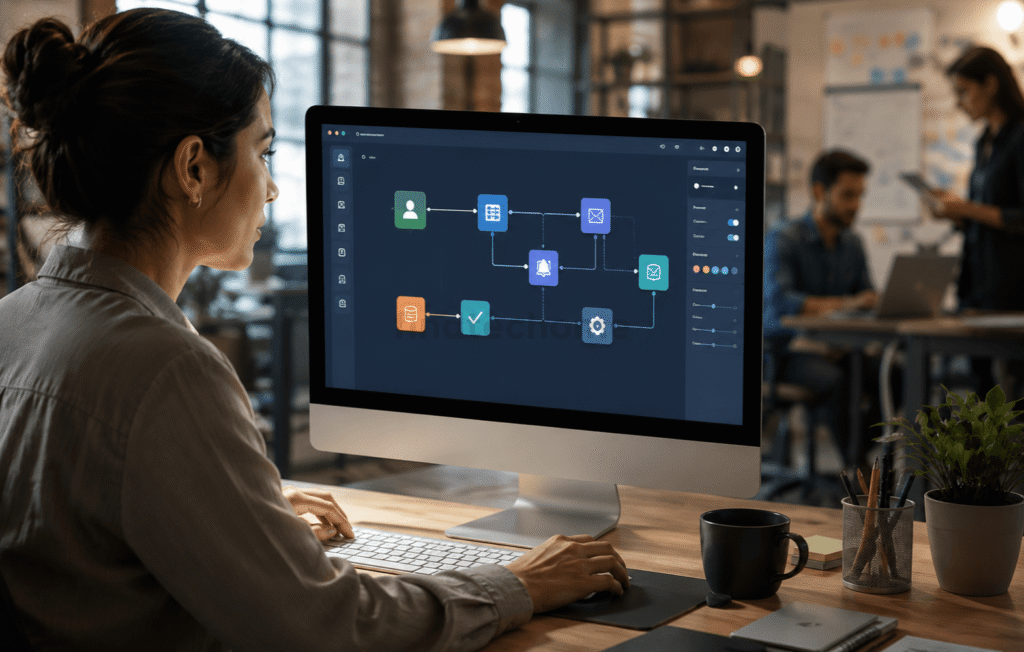
Building a piece of internal business software used to mean submitting a request to an engineering team, waiting for it to reach the top of a backlog, and hoping the final result matched what was actually needed months earlier when the request was written. No-code and low-code platforms have changed that sequence for a meaningful category of tools, letting a non engineer assemble a working internal application, a request tracker, an approval workflow, a simple customer database, without writing traditional code.
What no-code actually replaces
These platforms are strongest for internal, workflow style software, tools that move information between people and systems, trigger approvals, or track a process, rather than for consumer facing products or anything requiring heavy custom logic or performance at large scale. A finance team building its own expense approval tracker, or an operations team automating a repetitive intake process, are typical examples of the category these tools serve well, since the underlying logic tends to be straightforward even if the process itself is important to the business.
Why this changes engineering priorities, not engineering jobs
Rather than eliminating the need for engineers, no-code adoption tends to shift what a company’s engineering team spends time on, moving away from small, repetitive internal tool requests and toward the more complex, customer facing, or performance sensitive systems that actually require custom code. Engineering teams at companies that have adopted no-code tools broadly often report a meaningful reduction in the backlog of small internal requests, freeing capacity for the harder problems that justify a trained engineer’s time.
The risk of tools built without engineering oversight
A tool built quickly by someone outside an engineering team can also skip the security review, data handling standards, and documentation that a traditional development process would normally require, which becomes a real risk once that tool starts handling sensitive customer or financial data. Companies that have adopted no-code platforms successfully at scale generally pair that adoption with some form of light governance, a review step before a tool touches sensitive data, a central inventory of what has been built and by whom, rather than leaving every team to build and connect tools with no oversight at all.
Where this is heading
As these platforms add AI assisted building, describing a workflow in plain language and having the tool assemble much of the logic automatically, the gap between what a non engineer can build alone and what previously required a developer keeps narrowing. That trend is unlikely to eliminate the need for professional software engineers, but it is steadily shrinking the category of software simple enough that waiting for a dedicated engineering team no longer makes sense.