Most conversations about blockchain still start and end with cryptocurrency prices, but the technology underneath has spent the last several years finding quieter, less headline-grabbing jobs. A blockchain is, at its core, a shared record that many parties can trust without needing to trust each other or a single middleman. That property turns out to be useful for a lot of problems that have nothing to do with trading tokens, and a growing number of banks, shippers, and governments have started using it that way.
Supply chains and trade finance
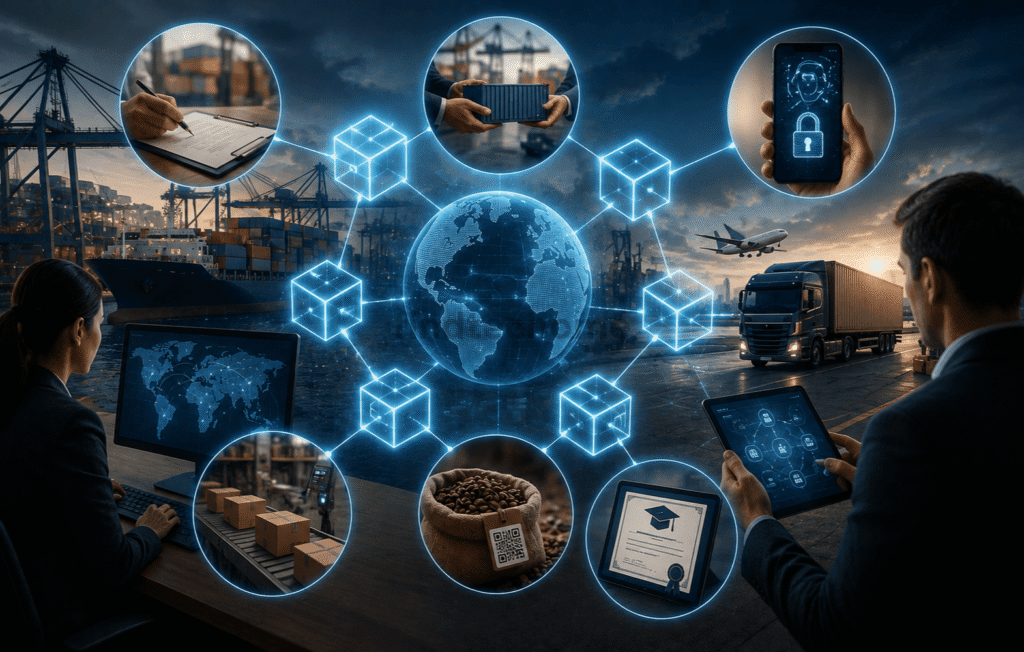
A shipment of goods crossing several borders typically passes through a stack of paper documents, bills of lading, customs forms, letters of credit, each one a point where fraud, loss, or simple delay can creep in. Shared ledger systems let a shipper, a bank, and a customs authority all view the same verified record of where a shipment is and who has paid for what, without any single party controlling the master copy. Several large banks and shipping alliances have run trade finance pilots built this way, cutting document processing time from days to hours in some cases, because every party works from one record instead of reconciling separate paper trails after the fact.
Tracking real goods, not just tokens
Food safety and luxury goods are two areas where blockchain based tracking has moved past the pilot stage. A retailer can trace a batch of produce back to a specific farm in minutes instead of days when a contamination scare hits, because each step, harvest, processing, shipping, is logged to a record that cannot be quietly edited after the fact. Luxury brands use a similar approach to fight counterfeiting, attaching a verifiable digital record to a physical item so a buyer can confirm authenticity without relying solely on a paper certificate that can be forged.
Digital identity and records
Several governments and universities now issue diplomas, licenses, or identity credentials on blockchain based systems, which lets a third party, an employer checking a degree, a border agent checking a credential, verify authenticity instantly rather than calling an institution and waiting for a reply. This use case appeals to public agencies specifically because it reduces fraud without requiring every verifier to trust a single centralized database that could be hacked or manipulated.
Why this has not made bigger headlines
These systems tend to be boring by design, which is part of why they succeed. A working trade finance ledger does not need a token, a price chart, or public attention; it needs to move a shipment faster and more reliably than the paper process it replaced. That makes enterprise blockchain adoption far less visible than crypto trading, even in years when it is quietly growing faster in terms of real world transaction volume. The most durable use case for this technology may end up being the least glamorous one: making existing, unglamorous paperwork processes faster and harder to tamper with.